Bellapais Abbey
When traveling around Northern Cyprus, be sure to visit Kyrenia. This resort town, located in a strip between the mountains and the coast, has everything you need for a comfortable vacation: gorgeous sandy beaches, luxurious five-star hotels, prestigious residential complexes, many cafes and restaurants, large shopping centers and fashionable boutiques.
The city itself and its surroundings are rich in attractions. One of the most famous is the Bellapais Abbey, located in the village of the same name near Kyrenia. You can stroll along the picturesque streets, immersing yourself in the world of old legends and tales.
History of Bellapais Abbey
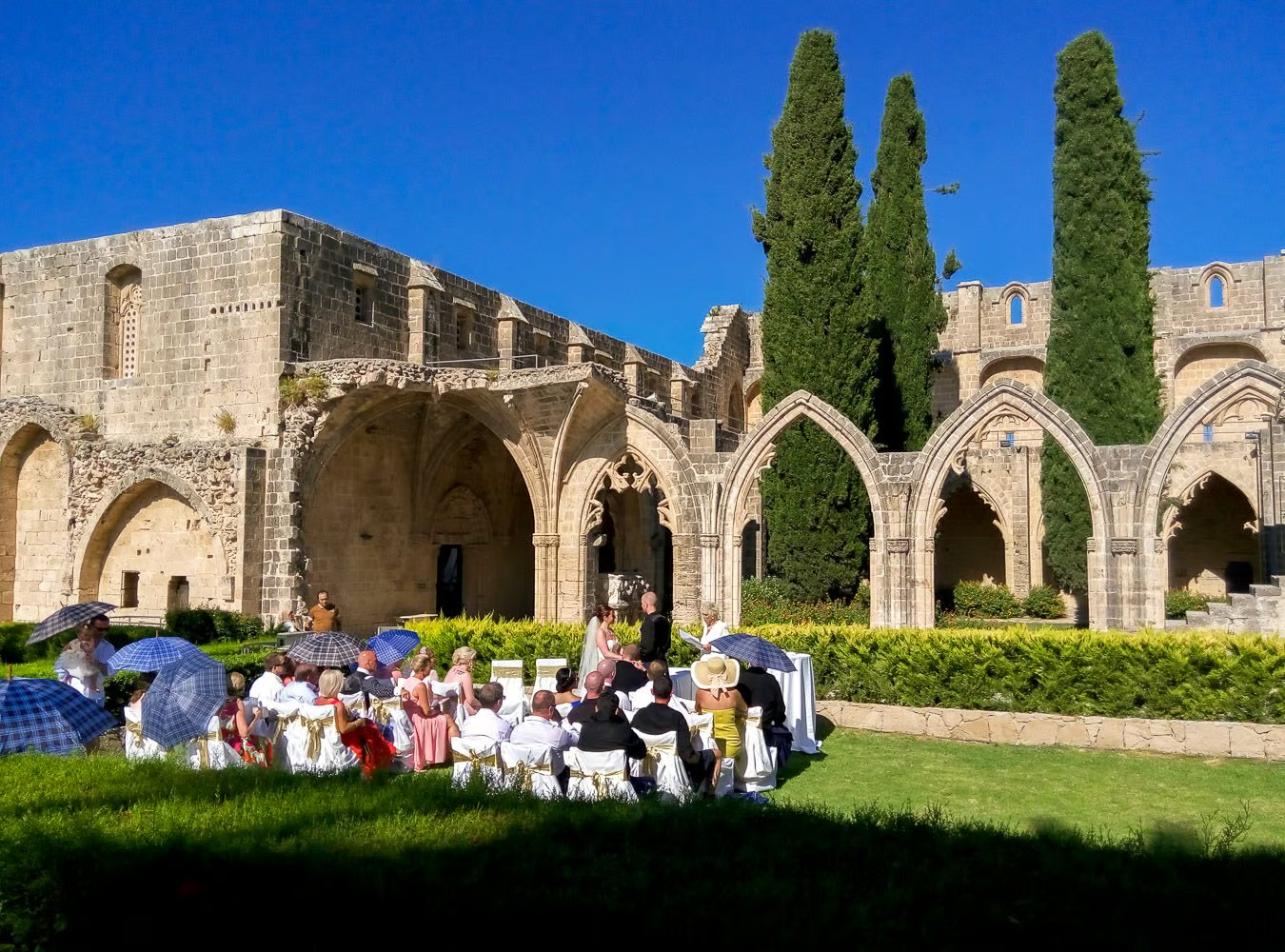
Bellapais Abbey is perhaps the most touching landmark of Northern Cyprus. This beautiful example of Gothic culture, erected by the Crusaders in the early 13th century, has seen a lot in its time. The monument is one of the most visited cultural and historical sites on the island. Perhaps its popularity is due to the fantastic panoramic views of the surrounding area. The building, or rather the remains of the walls that have survived to this day, are located on the top and are surrounded by a picturesque park with cypresses. When visiting here, guests can stroll along the old village streets paved with cobblestones and enjoy the silence surrounded by authentic one-story houses. But most likely, tourists are attracted by the history of the Abbey and the secrets associated with it.
The Abbey of the Beautiful World or the White Abbey are two other names for the monument. It was built by the Augustinian monks who came to Cyprus from Jerusalem and settled in the foothills of the Kyrenia Mountains. Today, there is a small village called Bellapais, but in 1187, the area was virtually deserted. To protect themselves from the scorching sun, the monks wore white cloaks and hoods (hence the name „White Abbey“). They were true ascetics who almost never spoke, praying and working all day long.
The monastery received its official status in 1206. The monks who settled here completely rejected the benefits of civilization and chose an ascetic lifestyle. Even in winter, the monastery remained without heating, which is why the cells became quite cold. The monks steadfastly endured all the hardships and refused to cover themselves with warm blankets.

The abbey flourished in the 13th century, when the famous knight Richard the Norman left his money and a piece of the Life-giving Cross to the abbey. From that moment on, the monastery began to expand, and pilgrims from all over the world flocked here. The then ruler of Cyprus, Hugo III, treated the local clergy with great respect. Thanks to his favor, Bellapais was given land plots and awarded status insignia. From that moment on, the abbey began to be regularly visited by crowned heads, among whom were representatives of the royal Lusignan family.
Another ruler, Hugo IV, made a significant contribution to the development of the monastery complex. He ordered funds to be allocated for the construction of a church, a refectory, and several outbuildings. Such close attention from the monarchs made the abbey famous beyond Cyprus. But sudden fame and wealth played a cruel joke on the monks. Many of them forgot about piety and instead of praying, they plunged into the world of idle entertainment.
All good things must come to an end sooner or later. This is what happened to the Abbey: the period of prosperity did not last long, and already in the 14th century, difficult times came for the inhabitants of the monastery. The Genoese appeared in Kyrenia, and they simply could not ignore the rich refuge of the monks. In 1373, the monastery was plundered. All the relics and provisions disappeared from the monastery, and Bellapais was never able to recover from this shock.
The abbey fell into complete decline. As did morality and ethical principles. From then on, the monastery forgot about asceticism and prayer. The monks abandoned their usual canons, plunging into a dissolute and dissolute life. Those who had recently been ardent supporters of celibacy began to openly live in cells with mistresses and practice polygamy. The monks‘ children played noisily in the courtyard of the complex, and the monastery itself lost all authority.
In 1571, Cyprus was conquered by Turkey. The new rulers showed little interest in the life of the monastery, so they simply handed it over to the Cypriot Orthodox Church. The lands belonging to the abbey were leased, the buildings of the monastery were abandoned and gradually began to crumble. Local residents also contributed to the destruction. They actively visited the church, but used all other buildings for their own needs. Many joke that in the village of Bellapais, stones from the monastery walls can be found in the masonry of every house.
Later, the British military settled in the monastery, which partly saved it from complete destruction. Later, after World War II, the British became seriously interested in the cultural and historical heritage of Cyprus. Having assessed the architectural value of the abbey, the authorities decided to undertake its restoration. The unique complex of medieval Gothic architecture again became a place of attraction for pilgrims. But, unfortunately, not much could be preserved and restored.

Myths and Legends of the Abbey
The Bellapais Abbey is surrounded by many legends. One of them is connected with monks who apostatized. One evening, the abbot of the monastery was passing by the cells and heard a noise unusual for the monastery. Opening the door, he found two monks in the company of women. The fun was in full swing, and after the attack of the Genoese, wild parties became common for the abbey. But the abbot did not want to put up with this state of affairs. A terrible punishment was prepared for the apostates: they were executed and buried in the courtyard of the complex in different corners. Cypress trees were planted on the graves of the monks and their lovers, which reach for the sky, but will never be able to touch each other with their branches. The sinful lovers are separated from each other forever.
This is such a romantic, but very sad story. Of course, it is just a myth. In fact, the cypresses were planted much later – in 1940. And exclusively for beauty, and not as a punishment.
Bellapais Abbey today
Despite the fact that the abbey is in a dilapidated state, several buildings with elements of original decorations and artistic paintings have been preserved. Services are not held in the temple, but music festivals are a frequent occurrence within the monastery walls. The huge refectory has excellent acoustics, so musicians of various genres willingly perform here.
As for the architectural value, this is a very interesting object for connoisseurs of Gothic culture. At the entrance to the refectory, you can see richly decorated sarcophagi brought from Salamis. They were used as washbasins before meals. An attentive visitor will certainly notice traces of bullet holes on the walls of the refectory: during the presence of the British, there was a shooting range here.
The abbey courtyard has preserved Gothic arches, and there is a lot of greenery and flowers around. And be sure to go up to the second floor – from here you can enjoy a picturesque view of the sea and the village of Bellapais.
How to get there
Bellapais Abbey is located a few kilometers from Kyrenia. There is no public transport here, but you can come as part of a tour group. Another option is to use a taxi or a rented car. The road will take no more than 15 minutes.a, tempor in blandit id, porta in ligula. Aliquam laoreet nisl massa, at interdum mauris sollicitudin et.